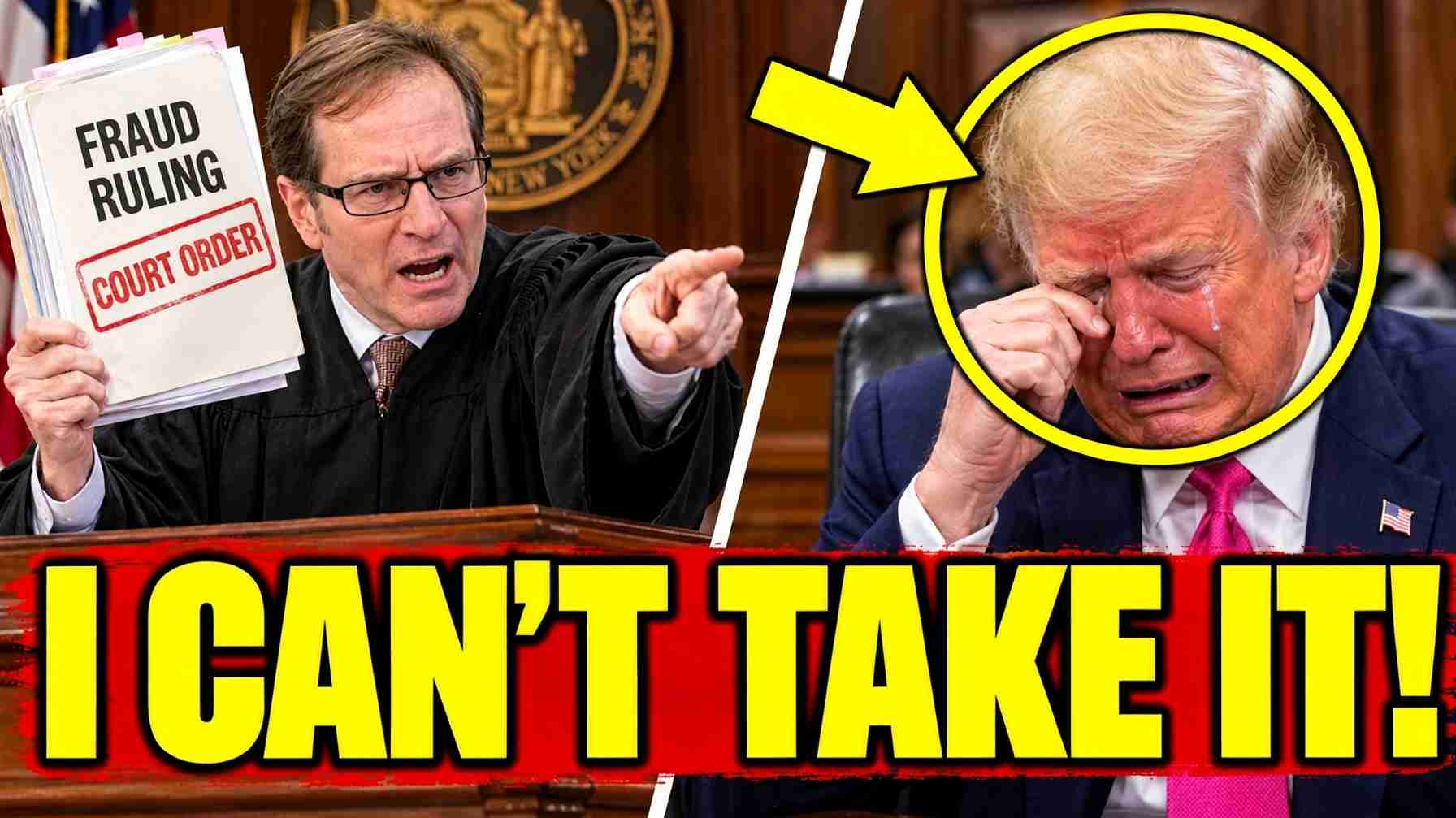

Trump DRAGGED OUT Of Courtroom After EXPLOSIVE Clash With Judge!
Donald Trump abruptly left a Manhattan courtroom during a heated defamation trial, following repeated confrontations with the presiding federal judge.
The dramatic departure attracted national attention and intensified an already contentious legal battle involving writer E. Jean Carroll.
However, contemporary courtroom reports do not establish that Trump was physically dragged out or forcibly removed by security officers.
Instead, he stood up and walked out during closing arguments, while Secret Service personnel followed him.
The distinction is important because an earlier judicial warning had raised the possibility of excluding him for disruptive conduct.
Together, those separate events created a dramatic narrative about courtroom authority, presidential privilege, and the limits of legal advocacy.
The confrontation unfolded in January 2024 before United States District Judge Lewis Kaplan in Manhattan federal court.
At the time, Trump was defending himself against a civil defamation claim brought by E. Jean Carroll.
The proceedings concerned statements Trump made after Carroll publicly accused him of sexually assaulting her decades earlier.
Trump denied the allegation and repeatedly disputed Carroll’s account, maintaining that the accusations against him were false.
However, earlier civil proceedings had already produced significant findings concerning his conduct and public statements about Carroll.
In May 2023, a federal jury found Trump liable for sexually abusing Carroll and defaming her.
That jury awarded approximately five million dollars in damages after considering testimony, evidence, and the applicable legal instructions.
The verdict established civil liability rather than a criminal conviction, an important distinction throughout the subsequent litigation.
A separate defamation case concerned statements Trump made in 2019 while serving as president of the United States.
The January 2024 trial focused primarily upon determining the financial damages associated with those earlier defamatory statements.
Consequently, the proceedings did not involve a new criminal prosecution or the possibility of a prison sentence.
Instead, jurors were asked to consider the consequences of Trump’s statements and the appropriate monetary remedies.
The case became especially contentious because Trump continued publicly disputing Carroll’s allegations despite the earlier civil verdict.
His attorneys challenged aspects of the proceedings and argued that the damages being sought were excessive.
Carroll’s legal team maintained that Trump’s statements had caused serious reputational harm and exposed her to harassment.
The dispute therefore involved both financial compensation and questions about accountability for repeated defamatory statements.
Judge Kaplan was responsible for ensuring that the trial proceeded according to established rules of evidence and procedure.
That responsibility included controlling courtroom conduct, deciding objections, and enforcing previous rulings concerning admissible evidence.
The judge also had to protect the jury’s ability to evaluate the case without improper interference.
Those obligations became central when Trump began making audible comments during Carroll’s testimony.
On January 17, 2024, Carroll testified about the consequences of Trump’s public statements and the hostility she experienced.
Her attorneys complained that Trump was speaking loudly enough for jurors to hear comments from the defense table.
According to courtroom reporting, Trump made remarks challenging Carroll’s account and characterizing the proceedings as politically motivated.
Judge Kaplan initially instructed him to lower his voice and stop making disruptive comments during testimony.
However, the concerns continued, prompting the judge to issue a more explicit warning about courtroom behavior.
Kaplan indicated that he might have to consider excluding Trump if the interruptions continued.
Trump responded that he would welcome such an outcome, creating a tense exchange with the judge.
The remark attracted attention because defendants ordinarily have substantial interests in attending proceedings involving their legal rights.
However, courtroom attendance does not provide unrestricted permission to interrupt witnesses or disregard judicial instructions.
Judges possess authority to maintain order and prevent conduct that interferes with the administration of justice.
That authority can include removing disruptive participants under circumstances permitted by law.
Nevertheless, the January 17 warning did not result in Trump being physically expelled from the courtroom.
He remained involved in the proceedings, and the trial continued under Kaplan’s supervision.
The distinction between a threatened removal and an actual expulsion became important when later reports described Trump’s departure.
A week later, Trump returned to the witness stand to offer brief testimony in his own defense.
His appearance on January 25 generated considerable attention because of the restrictions governing his testimony.
The judge had previously ruled that certain matters could not be relitigated before the damages jury.
Those limitations reflected earlier findings concerning liability and the scope of the remaining dispute.
Trump’s attorney, Alina Habba, sought to present testimony supporting his explanation for making the challenged statements.
However, Kaplan restricted questioning to subjects relevant under the court’s existing evidentiary rulings.
Trump’s testimony lasted only a few minutes, illustrating the narrow issues permitted during that stage.
At one point, he offered an explanation that the judge determined exceeded the permissible scope.
Kaplan directed that the statement be removed from the trial record for the jury’s consideration.
The exchange further intensified disagreements between Trump’s defense team and the court.
Trump subsequently criticized the proceedings as he departed, expressing his dissatisfaction with the judicial process.
However, that departure was separate from the more widely reported walkout during closing arguments the following day.
The January 26 proceedings brought the dispute to its most dramatic public moment.
The day began with additional disagreements between Judge Kaplan and Trump’s attorney concerning the presentation of evidence.
Habba challenged restrictions that the judge had already imposed on material the defense wanted to introduce.
Kaplan rejected her efforts and instructed her to comply with his rulings.
When the exchange continued, the judge warned that further defiance could result in detention.
The warning concerned Habba’s courtroom conduct rather than a criminal charge against Trump.
It also did not result in the attorney actually being jailed.
Nevertheless, the confrontation heightened tensions before the jury returned to hear closing arguments.
Carroll’s lead attorney, Roberta Kaplan, then began addressing the jurors about the damages she believed were justified.
The attorney and the presiding judge share a surname but are not related.
During her argument, she criticized Trump’s response to the earlier verdict and his continued public statements about Carroll.
She urged jurors to consider the consequences of those statements when determining the appropriate damages.
Trump remained seated at the defense table during the opening portion of her remarks.
However, he soon stood up and walked toward the courtroom exit.
Secret Service personnel rose and followed him as he left the room.
Judge Kaplan interrupted the proceedings to acknowledge Trump’s departure for the official record.
The moment became a prominent news story because the former president had left during opposing counsel’s closing argument.
However, the documented account describes a voluntary walkout rather than a physical removal by court security.
No reliable contemporary report establishes that officers grabbed Trump, restrained him, or dragged him from the courtroom.
The distinction separates a dramatic political headline from the actual events witnessed during the proceedings.
Trump’s departure nevertheless carried significance because it occurred while jurors were hearing arguments concerning his conduct.
Carroll’s attorney had been discussing whether his behavior demonstrated disregard for the earlier verdict.
The walkout therefore became part of the public controversy surrounding his response to the litigation.
However, it did not automatically establish additional legal liability or constitute a separate criminal offense.
The trial continued after his departure, with the judge maintaining control over the proceedings.
Trump later returned for his defense team’s closing argument.
That return further demonstrates why descriptions of a permanent forced expulsion are inaccurate.
The courtroom episode involved a voluntary departure during a contentious trial, not a documented physical ejection.
The difference also matters when evaluating the judge’s earlier warning.
Kaplan had warned Trump that disruptive conduct could jeopardize his continued presence in the courtroom.
However, the January 26 walkout was not the execution of that earlier threatened sanction.
Trump chose to leave while opposing counsel was speaking.
The judge recorded the departure, but did not order security officers to physically remove him.
Those details are essential for understanding the actual legal significance of the incident.
The confrontation also highlighted the unusual pressures surrounding litigation involving a former president and presidential candidate.
Trump was campaigning for another term while simultaneously defending himself in multiple civil and criminal proceedings.
His legal appearances therefore attracted substantial attention from journalists, supporters, critics, and political commentators.
However, the Carroll trial remained a civil proceeding governed by ordinary federal procedural rules.
The defendant’s political prominence did not eliminate the judge’s responsibility to enforce courtroom standards.
Likewise, the judge’s authority did not eliminate Trump’s ability to challenge rulings through established appellate procedures.
The resulting tensions reflected competing responsibilities within the judicial system.
Trump’s attorneys sought to defend their client and contest the damages requested by Carroll.
The court sought to enforce previous decisions and maintain an orderly presentation of evidence.
Carroll’s attorneys sought compensation for the injuries they argued resulted from Trump’s defamatory statements.
The jury was responsible for determining damages under the instructions provided by the judge.
Those separate roles explain why courtroom disputes can become intense without necessarily changing the underlying legal questions.
The central issue remained the financial consequences of Trump’s statements about Carroll.
Her legal team argued that his public denials and attacks had damaged her reputation and personal security.
The defense disputed the amount of compensation sought and challenged the prosecution of the civil claims.
However, the earlier liability findings restricted the issues available for reconsideration during the damages trial.
The jury therefore evaluated a narrower set of questions than those addressed in the previous proceedings.
On January 26, the jury awarded Carroll approximately eighty-three million dollars in damages.
The verdict included compensation for reputational injury and additional punitive damages.
The punitive component was intended to address conduct the jury determined warranted punishment under the applicable civil standards.
However, punitive damages in a civil lawsuit are not equivalent to a criminal prison sentence.
The award created a substantial financial judgment against Trump, subject to further judicial review.
Trump rejected the verdict and pursued appellate challenges concerning the judgment and the trial court’s rulings.
His legal team disputed both the legal basis and the amount of the damages award.
The litigation therefore continued beyond the dramatic courtroom exchanges.
However, the January walkout remained one of the most widely circulated episodes from the trial.
Its prominence reflected the unusual spectacle of a former president leaving during closing arguments in federal court.
The event also raised questions about how public figures respond to adverse legal proceedings.
A defendant may disagree strongly with a court’s decisions and continue seeking relief through appeals.
However, disagreements do not automatically justify interrupting witnesses or disregarding instructions governing courtroom conduct.
Judges must balance the rights of litigants with the need to preserve fair and orderly proceedings.
The Kaplan-Trump exchanges illustrated the difficulty of maintaining that balance during highly publicized litigation.
The judge’s warnings concerned conduct occurring inside the courtroom.
They did not amount to a finding that Trump had committed a new criminal offense.
Similarly, the voluntary walkout did not create an independent sentence or detention order.
The legal consequences of the trial arose primarily from the jury’s civil damages verdict.
That distinction is particularly important because sensational headlines frequently combine different courtroom incidents.
Trump faced warnings about possible exclusion during Carroll’s testimony on January 17.
He delivered brief testimony and criticized the proceedings on January 25.
He walked out during opposing counsel’s closing argument on January 26.
Those events occurred on different days and involved different procedural circumstances.
Combining them into a single story about forced removal can create an inaccurate impression of what happened.
The actual sequence demonstrates escalating tensions without establishing that Trump was physically dragged from the courtroom.
The controversy also illustrates the importance of precise language when reporting legal proceedings.
A judge threatening exclusion is different from a judge ordering exclusion.
A defendant voluntarily leaving is different from being escorted out under compulsion.
A security detail following a protected individual is different from court officers forcibly removing that person.
Those distinctions may appear technical, but they materially change the meaning of the event.
In Trump’s case, Secret Service personnel followed him when he chose to leave.
Their movement did not establish that they were enforcing an order of removal.
The judge’s acknowledgment of the departure similarly did not convert the walkout into a forced expulsion.
Accurate reporting requires identifying those differences rather than relying upon dramatic interpretations of courtroom footage.
The incident also became part of broader discussions concerning the independence of the federal judiciary.
Federal judges are expected to apply legal rules without regard to the political status of litigants.
Their authority includes managing trials, enforcing evidentiary rulings, and protecting the integrity of jury proceedings.
Attorneys are expected to advocate vigorously while complying with those rules.
Defendants retain rights to participate in their defense, subject to lawful courtroom requirements.
The Carroll proceedings brought those principles into sharp public focus.
Trump argued that the trial was unfair and that the judge’s decisions restricted his ability to defend himself.
Carroll’s legal team maintained that the proceedings were necessary to address the consequences of defamatory statements.
The judge applied rulings that limited the issues available for reconsideration.
Those competing positions should be distinguished from factual claims about what occurred inside the courtroom.
The evidence supports the existence of tense exchanges, warnings, and a voluntary walkout.
It does not support the claim that Trump was physically dragged out by officers.
The distinction remains important even when the underlying confrontation was genuinely dramatic.
The legal system also provides mechanisms for challenging trial decisions after a judgment is entered.
A losing party may appeal on grounds involving legal interpretation, evidence, procedure, or other recognized issues.
However, appellate review is governed by specific standards rather than a complete repetition of the original trial.
Courts examine whether identified errors justify modifying or reversing the judgment.
The existence of an appeal does not automatically erase a jury’s findings.
Likewise, the filing of an appeal does not establish that the original proceedings were conducted improperly.
Trump’s subsequent legal challenges therefore required separate judicial examination.
The courtroom walkout itself did not determine the outcome of those appeals.
The controversy also demonstrates why civil liability must be distinguished from criminal guilt.
The Carroll litigation involved civil claims concerning sexual abuse and defamation.
The earlier jury found Trump liable under the applicable civil standards.
The later jury determined damages for separate defamatory statements.
Neither proceeding constituted a criminal prosecution seeking imprisonment for the underlying allegations.
That distinction is essential when evaluating claims that the courtroom confrontation placed Trump in immediate danger of incarceration.
The January 2024 trial concerned monetary remedies, not a criminal sentencing proceeding.
The judge’s warnings involved courtroom conduct and the possibility of exclusion.
They did not establish that Trump would be imprisoned because he walked out.
The case also highlighted the role of punitive damages in American civil litigation.
Such damages may be awarded under applicable law when a jury finds conduct sufficiently serious to justify additional punishment.
They are distinct from compensation intended to address measurable injuries.
However, their availability and amount remain subject to legal requirements and judicial review.
The Carroll jury’s award reflected its assessment of the evidence and the instructions governing the damages questions.
Trump’s defense continued challenging that outcome through the courts.
The financial judgment therefore became a separate focus of litigation after the trial ended.
The courtroom confrontation remained significant primarily because of its public visibility and procedural context.
It illustrated how disagreements over evidence and judicial authority can become major political news.
However, the substantive legal dispute concerned defamatory statements and their consequences.
The event also generated debate about the conduct expected from prominent political figures during judicial proceedings.
Supporters of Trump viewed his response as an expression of disagreement with a process he considered unfair.
Critics interpreted the walkout as evidence of unwillingness to accept the authority of the court.
Those are competing political interpretations rather than findings established by the act of leaving.
The documented facts are narrower and more precise.
Trump stood up during closing arguments and walked out.
Secret Service personnel followed him.
Judge Kaplan acknowledged the departure for the record.
Trump later returned to the courtroom.
No verified account establishes that he was physically dragged out by security personnel.
The difference between those facts and the sensational headline is substantial.
The incident also reveals how the language used to describe an event can shape public understanding.
Words suggesting physical force imply a confrontation involving restraint and involuntary removal.
However, the contemporary accounts describe a departure initiated by Trump himself.
That distinction affects how readers interpret the judge’s actions and the defendant’s response.
A voluntary walkout may be controversial, but it is not equivalent to a forced expulsion.
The same principle applies to descriptions of the judge’s warnings.
Kaplan indicated that exclusion might become necessary if disruptive conduct continued.
However, he did not physically eject Trump during the documented January 26 episode.
The trial continued under judicial supervision, and the jury ultimately delivered its verdict.
The event therefore involved courtroom conflict without the physical confrontation suggested by the headline.
The broader significance lies in the relationship between legal accountability, public conduct, and judicial authority.
High-profile defendants may challenge rulings and publicly criticize proceedings.
However, courts retain responsibility for enforcing procedural requirements and protecting the fairness of trials.
The Carroll case demonstrated how those responsibilities can become difficult when litigation attracts extraordinary political attention.
It also illustrated the importance of separating courtroom behavior from the underlying merits of a civil claim.
The jury’s damages determination was based upon the issues presented during the trial.
The walkout attracted attention but did not replace the evidence or legal instructions governing that determination.
The judge’s warnings similarly concerned courtroom order rather than a new finding on the underlying allegations.
Understanding those distinctions produces a more accurate account of the proceedings.
The January 2024 confrontation was real, and Trump’s abrupt departure was widely documented.
However, the available evidence does not establish that he was forcibly removed or physically dragged from the courtroom.
The most consequential immediate outcome was the substantial civil damages award entered against him.
The subsequent litigation concerned the validity and amount of that judgment.
The incident remains a prominent example of the tensions that can arise when political controversy enters judicial proceedings.
Its historical importance does not require exaggerating what occurred.
Trump was warned about disruptive conduct, clashed with the judge, and later walked out during closing arguments.
He was not documented being physically dragged from the courtroom.
That distinction is the essential fact separating the verified proceedings from the dramatic claim in the headline.